
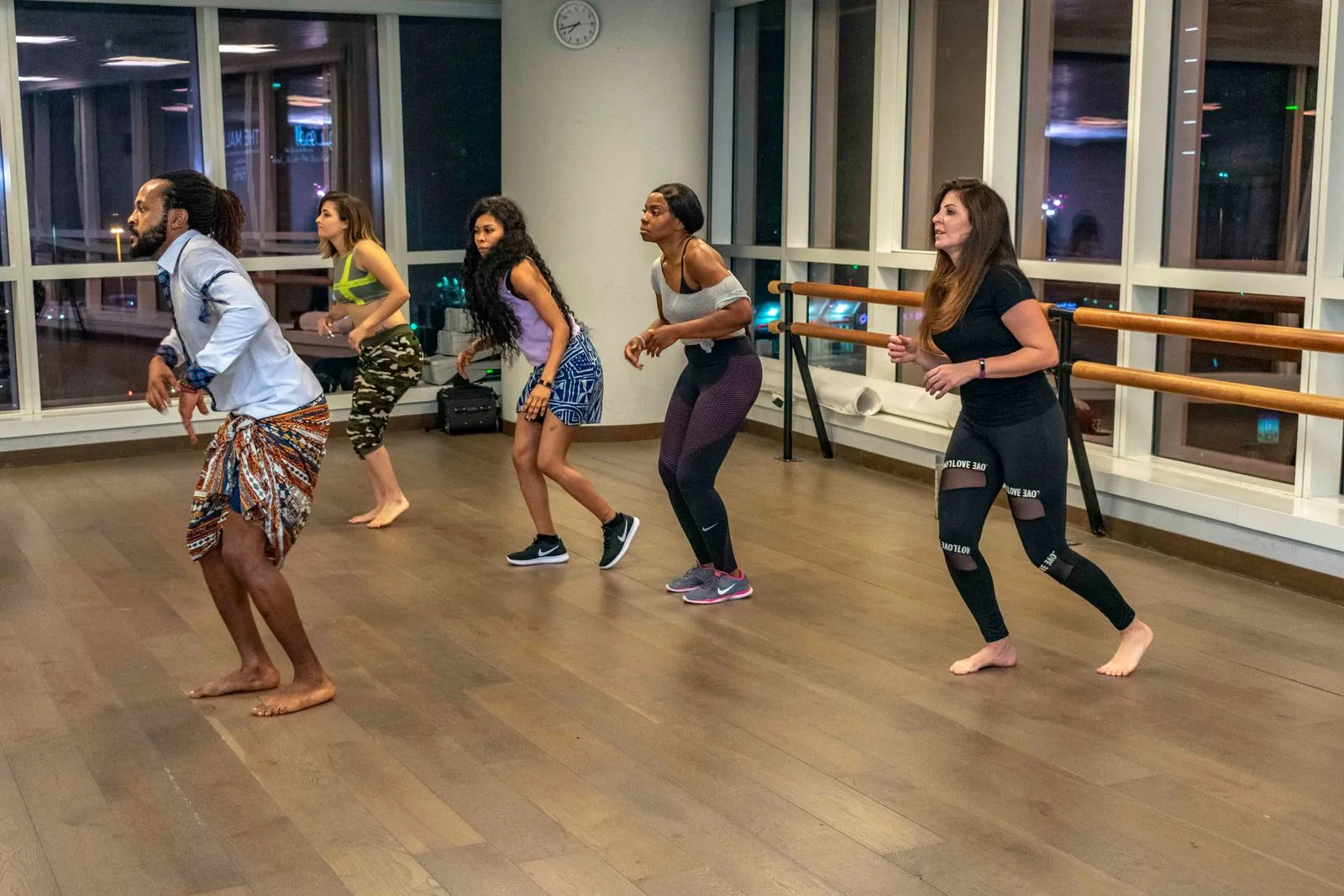
A first belly dance class is less about getting every move right and more about learning how your body can move with control. Beginners typically start with posture, simple isolations, and rhythm before combining them into short sequences. An instructor may demonstrate a movement, teach it in smaller parts, then give you time to practice at a comfortable pace. Knowing what these foundations involve can help you arrive with realistic expectations and focus on steady progress.
Start With Comfortable Posture
Belly dance posture should feel lifted but not stiff. Instructors often cue you to stand with feet about hip-width apart, knees soft, and weight balanced across both feet. Let your shoulders settle over your hips, keep your chest open without arching your back, and allow your arms to rest in a relaxed position. Small adjustments can make it easier to move while staying comfortable.
A teacher may first ask you to hold the position, then shift your weight gently from side to side. Notice whether you are locking your knees, gripping your shoulders, or leaning too far forward. If a cue causes discomfort, pause and ask for a modification. Posture is not a pose to force; it is a useful starting point that helps you explore movement with control.
Practice One Isolation at a Time
An isolation means moving one area of the body while keeping other areas relatively quiet. Beginners might practice moving the hips side to side, lifting and lowering them, or tracing a small circle. The movement may look subtle at first. That is normal: clear control matters more than making a large shape or moving quickly.
Instructors commonly break an isolation into a starting position, a direction, and a return. For a hip lift, for example, you might keep both knees soft, raise one side of the hip, then release it without shifting your whole torso. Practice slowly and stay within a comfortable range. A mirror can help you observe the movement, but use it as feedback rather than a test.
Find the Rhythm Before Adding Moves
Rhythm practice helps you connect movement to music without needing to memorize a full routine. Your instructor may play a beat and ask you to clap, step, or shift your weight in time. Listen for the steady pulse first. Once that feels familiar, you can try a simple movement on each beat or hold a movement for several beats.
If the music feels fast, return to a smaller action, such as stepping in place or marking the beat with your hands. A teacher may count aloud, demonstrate the timing, and then invite the class to try without counting. These changes give you more than one way to understand the rhythm. You do not need to know music terminology to begin following a beat.
Combine Skills in Small Sequences
After practicing posture, isolations, and rhythm separately, a class may combine them into a short pattern. You might step to the beat while making a gentle hip movement, then pause and repeat. Instructors often teach the sequence in pieces, review each piece, and connect them only when the parts feel more familiar.
Expect to repeat movements and make adjustments as you go. Coordination develops through practice, and beginners do not need to match the teacher perfectly on the first attempt. Take breaks when needed, ask questions about unfamiliar cues, and choose a smaller range of motion if that feels better. The aim is to build awareness and comfort while learning how the movement fits the music.
Belly dance foundations grow from manageable steps: find a relaxed posture, explore one isolation at a time, and listen for a steady beat before combining movements. Focus on comfort and control rather than perfection. If you’re ready to try these basics with guidance, consider joining a beginner class at Fresno Belly Dance.